Dimitris Antonakakis / Atelier 66
Venue
Opening hours
Hashtag
Overview
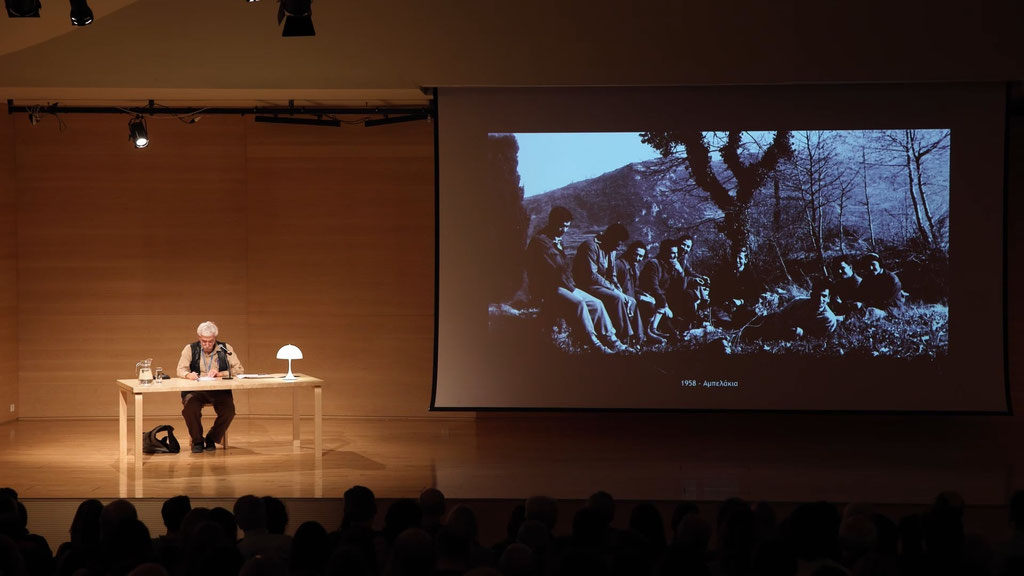
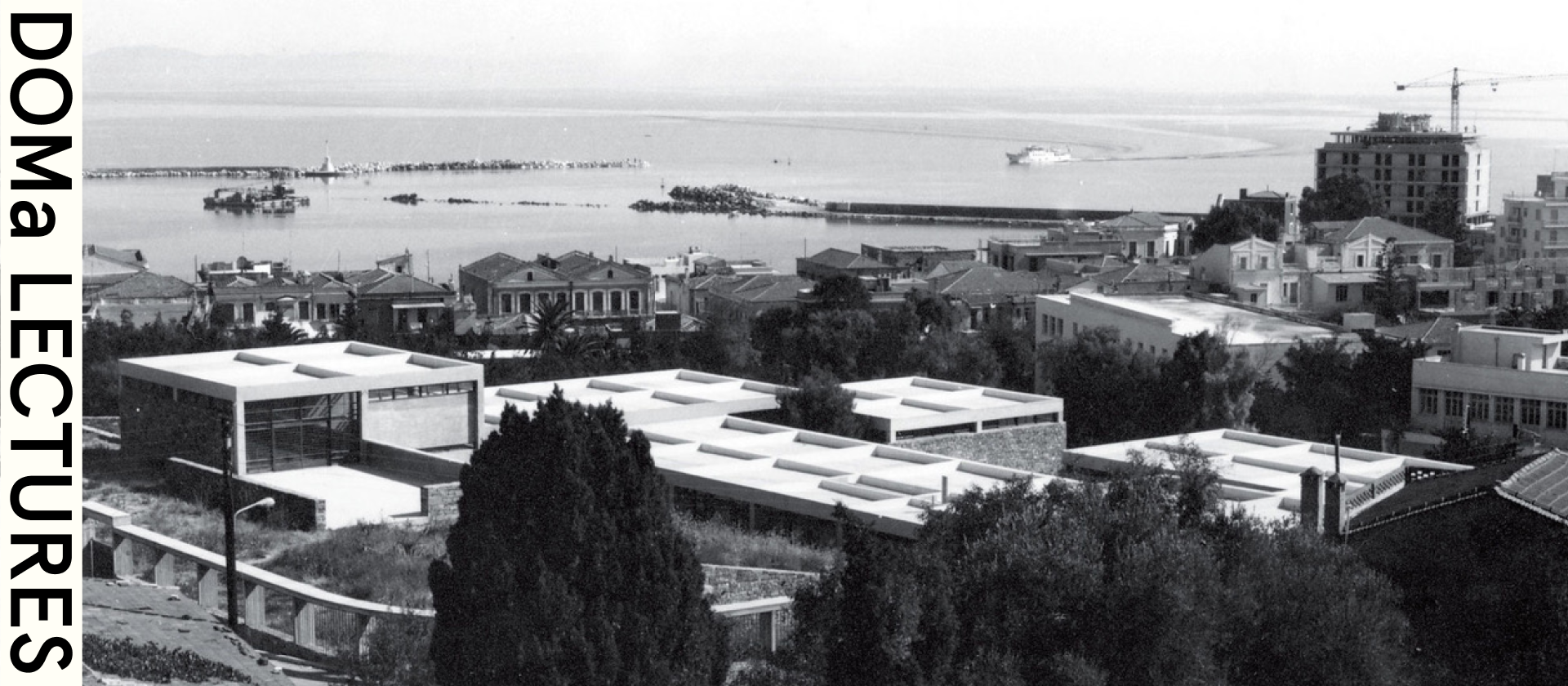
For the ninth edition of DOMa Lectures, DOMa welcomed architect Dimitris Antonakakis for a presentation dedicated to one of the most emblematic—and turbulent—works of Atelier 66: the Archaeological Museum of Chios, tracing its history from its original conception in the 1960s to its recent restoration and extension.
Introduced by Giorgos Panetsos, Antonakakis situated the project within the social, political and architectural context in which Atelier 66 emerged. He reflected on the formative influence of A. James Speyer’s teaching at the National Technical University of Athens between 1958 and 1961, as well as on a design methodology centred on measure, a careful reading of context and the freedom of deliberate deviations capable of reinforcing the coherence of an architectural work.
Moving through key moments in the Museum’s six-decade history, Antonakakis revisited the original competition, the challenges presented by the steeply sloping site, and the development of the project’s defining architectural ideas. Central among these was the elevated entrance square, conceived as a symbolic harbour bringing the life of Chios into the Museum, alongside the fragmentation of the programme into buildings whose scale responds to that of the surrounding settlement. Completed in 1970, the Museum later gained international theoretical significance, particularly through its interpretation by Alexander Tzonis and Liane Lefaivre as an exemplary work of critical regionalism.
Antonakakis also addressed the more difficult chapters in the building’s history. Alterations made during the 1990s progressively disrupted essential elements of the original design, turning the Museum, in his words, into a “defenceless building” increasingly detached from the principles and authors that had shaped it. A new chapter began in the early 2020s with the decision to restore and extend the Museum, an expansion already anticipated in the original scheme. Rather than attempting to return the building to an idealised original state, the new intervention acknowledges what Antonakakis described as the intrinsic value of its ageing, allowing the architecture to carry the traces of its own history.
The second part of the evening took the form of a conversation between Dimitris Antonakakis and Giorgos Panetsos, extending the discussion towards broader questions of architectural authorship, preservation and responsibility. Particular attention was given to the “loneliness of buildings” that possess architectural and cultural significance without enjoying formal heritage protection, as well as to the limitations of the current architectural competition system for public projects, which often separates architects from the subsequent construction and supervision of their work.
Returning finally to the Archaeological Museum of Chios, the discussion considered how new interventions can enter into dialogue with an existing work without compromising its identity. Across both the original design and its contemporary restoration, Antonakakis identified a common foundation: respect for the work and a continued commitment to the collective architectural principles established by Atelier 66 in the 1960s.
Presentation
View: