Maio / Langarita-Navarro
Venue
Opening hours
Hashtag
Overview
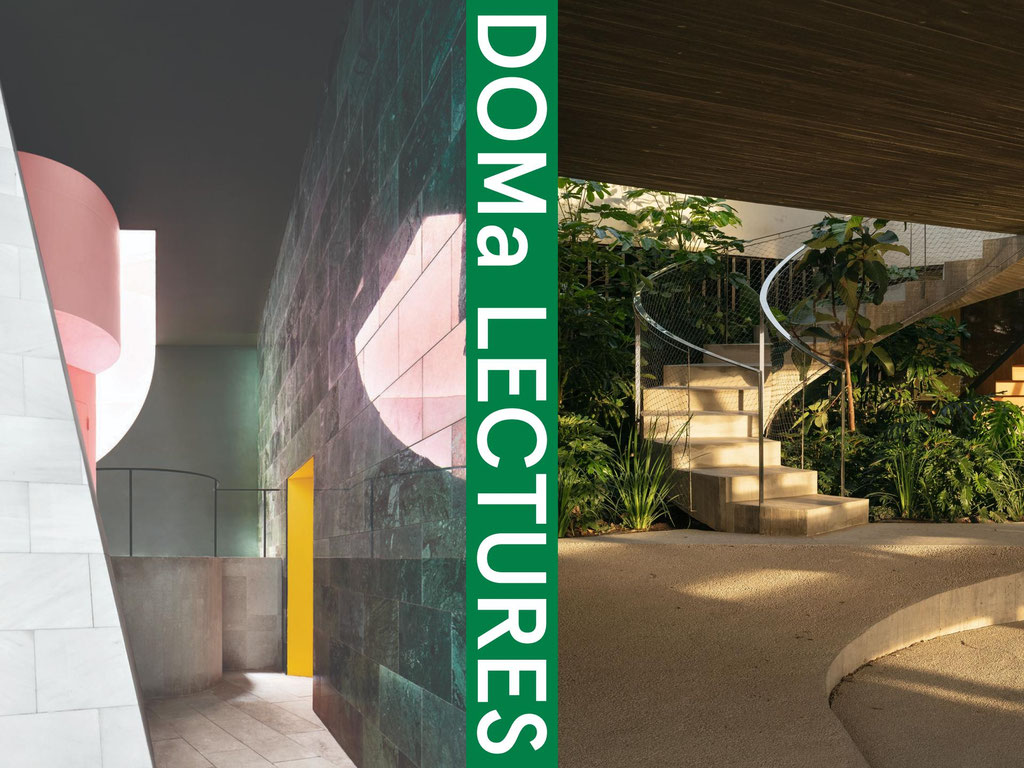
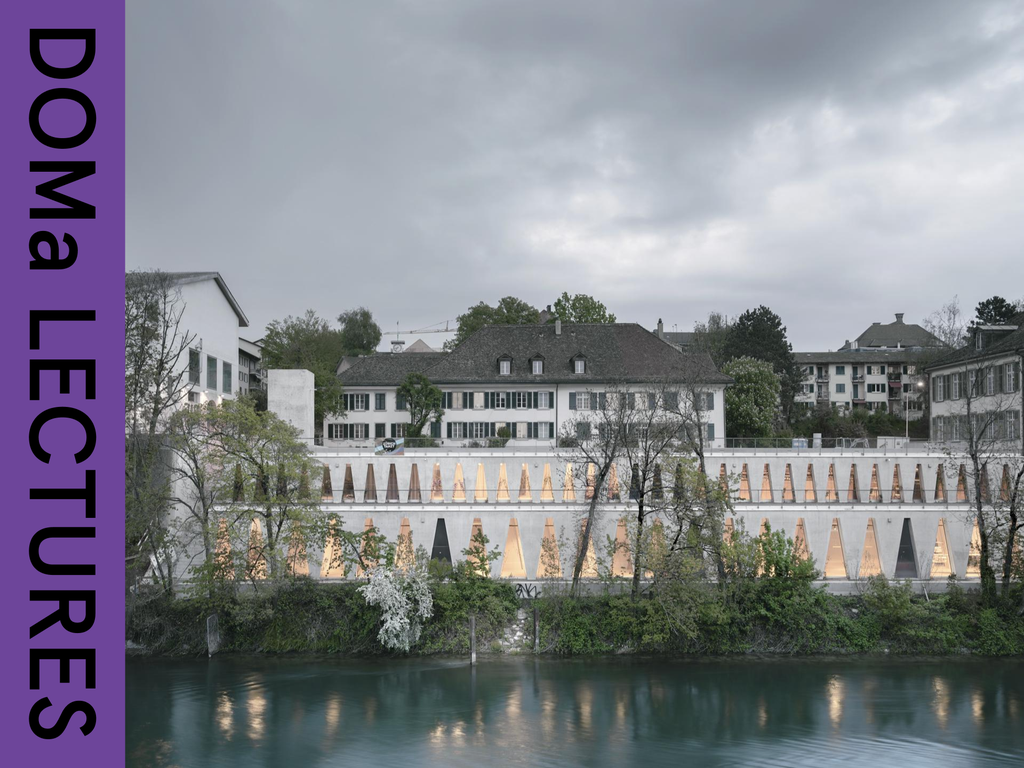
For the second edition of DOMa Lectures, DOMa welcomed Langarita–Navarro from Madrid and MAIO from Barcelona, bringing together two practices whose work shares a concern with architecture’s capacity to respond to changing social, material and economic conditions.
Introducing the evening, Giorgos Panetsos of DOMa highlighted the breadth of issues addressed by Langarita–Navarro, with particular emphasis on technology and the central role of materiality in their architectural thinking. María Langarita and Víctor Navarro then presented seven projects across different scales, using them to reflect on the boundaries of architecture and on what can constitute an architectural problem. They condensed this approach into the expression “Bust and Pelt”: a dialectic between the hard, inorganic and inert on the one hand, and the soft, organic and living on the other.
This attitude found one of its clearest expressions in the Red Bull Music Academy in Madrid. Faced with an extremely limited timeframe, Langarita–Navarro transformed a former slaughterhouse into a temporary “soft structure”: a garden-like city of rooms and communal spaces inserted within the existing building. Originally conceived for a short-lived event, the project remained in use for three years and, after its closure, was gradually reclaimed by vegetation and animals. Its changing life encapsulated a broader principle within the practice: working with what already exists to produce something new, while accepting that architecture itself will eventually become another layer of an evolving reality.
Langarita–Navarro also situated the beginnings of their practice in the aftermath of the 2008 financial crisis, which profoundly affected both the construction industry and their understanding of architectural production. This provided a direct connection with the second half of the evening, when Anna Puigjaner and Guillermo López of MAIO similarly described their practice as a response to this architectural “year zero”.
For MAIO, this response has centred on rethinking domestic life in relation to emerging forms of living and changing family structures. Through housing projects and research, the practice questions spatial conventions embedded in building regulations and inherited from the model of the nuclear family, proposing instead spatial systems capable of accommodating different uses and evolving over time. Their research into kitchenless apartments and collective kitchens in Lima, Mexico City and Tokyo expanded this enquiry beyond the individual dwelling, examining how care can move from the private domestic sphere into the neighbourhood, community and city. Their position was succinctly captured in the phrase: “It’s not about invention, but intention.”
Despite their distinct fields of investigation, the two practices revealed a shared architectural attitude shaped by the conditions that followed the financial crisis: an interest in resilience, adaptability and the intelligent management of existing resources. For Langarita–Navarro, this emerges through material experimentation, temporality and the productive coexistence of the artificial and the living; for MAIO, through flexible typologies capable of responding to social transformation and accommodating different forms of domestic and collective life.
The evening concluded with a conversation between the two practices on the common ground underlying their work: how architecture can anticipate its future costs, work more carefully with available resources and respond to the changing conditions of contemporary life. Their discussion ultimately proposed a broader understanding of architectural practice—one grounded not only in the production of buildings, but also in sharing, human relationships and the possibility of creating new forms of collective life.